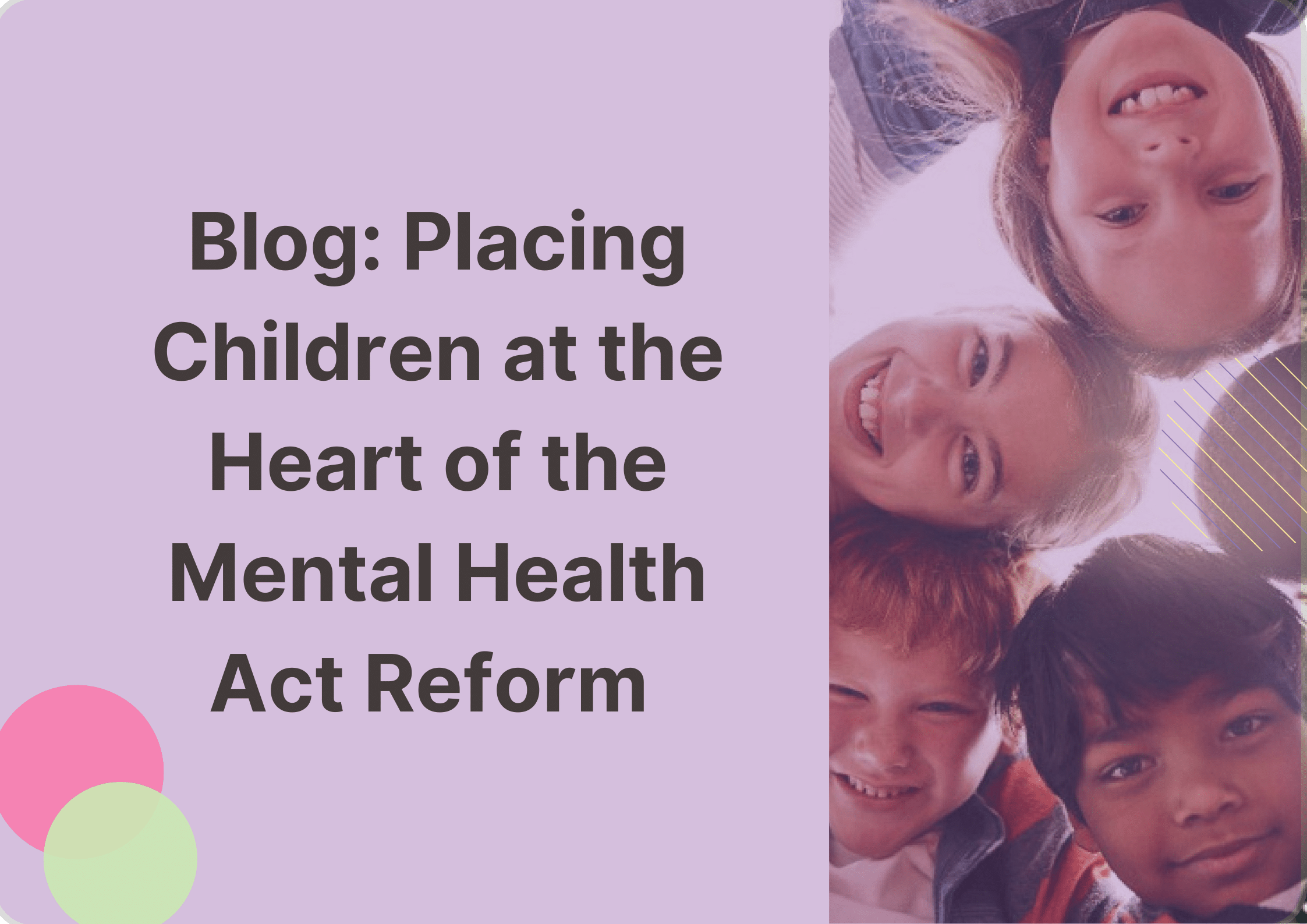
Reform to the Mental Health Act has been overdue and its excellent the Government has finally made this a reality; however, this was a missed opportunity to increase protections for children and young people.
With rising detentions, disproportionate use amongst racialised communities and poor patient experience it has long been clear the Act is outdated and unfit for purpose. So, while any attempt to modernise the Act is very welcome there is clearly more work needed to protect children and young people.
Capacity Assessments
The new legislation looks to try to tackle some of the concerns around the act, primarily by giving people more autonomy; letting them have a greater say in how they are treated and treating them with greater dignity. Yet, it was disappointing that many children and young people may not fully benefit from these changes.
A person’s ability to make decisions is integral to new the reforms and despite a broad agreement that professionals need more clarity on how to decide a child’s competence in relation to mental health decisions, the Government have failed to introduce any measures to address this in the Bill.
There are still no statutory criteria for assessing competence for people under 16, and the Government has suggested relying on Gillick competence which is broad and ambiguous and cannot be used as a universal test. We regularly called for a test for determining a child’s ability to make decisions and supported amendments put down to this end. Unfortunately, the Government has left any changes to the code of practice putting children and young people on a different statutory footing to adults. This reflects how children have often been an afterthought in the process.
Nominated Persons
The new Act also introduces the new role of the Nominated Person to replace the role of the nearest relative. This allows someone to have more choice over who supports and advocates for them them, rather than the role being assigned to their nearest relative. That person would be able to exercise all the statutory functions that the current nearest relative can, along with new rights and powers set out in the Bill. While it is great this new Nominated Person provision will apply to all children and young people aged under 18, and they will be able to appoint someone other than one of their parents (or others with parental responsibility) to act as their Nominated Person, the Government has again failed to consider the nuances of how this will apply to young people.
Where the person lacks the capacity or competence to decide who they would like to take on the Nominated Person role, an Approved Mental Health Professional can appoint someone on their behalf. However, there is a lack of clarity how the professional would choose this for young people. This is because this Bill fails to distinguish between the differing people who may have parental responsibility as outlined in the Children Act 1989.
Few professionals are likely to be familiar with the legal frameworks underpinning parental responsibility, or their relevance, and it would be unfair to expect them to have such knowledge, so we need additional clarity and detail in the legislation.
Despite many people alongside us raising this concern, including the Joint Committee on the Draft Mental Health Bill, who called on the Government to come forward with new proposals to address this issue at an early stage in the Bill’s process. There is still a lack of clarity on who the Approved Mental Health Professional should appoint. This is likely to cause additional confusion, anxiety and distress to children, young people and their families. And despite some last-minute amendments by the Government, there is a real risk a professional could appoint someone resulting in a serious safeguarding risk to the child and young person.
Inappropriate Settings
The Act also missed the chance to protect young people and children being treated in inappropriate settings. Between June 2024 and July 2025, the Care Quality Commission were notified of 116 instances where children and young people aged under 18 were admitted to adult wards and analysis by the Royal College of Psychiatrists showed that, from December 2023 to November 2024, 319 children and young people in England were placed out of area. The new legislation was a real opportunity to end these costly and traumatic practices.
However, the Mental Health Bill has not introduced any provision to prevent young people being placed on adult wards nor strengthened safeguards for those admitted to adult wards or in out of area placements. The Government has stated that it intends to review requirements in the Code of Practice and the new service specification for specialised children and young people’s mental health services. It was positive to see the Government reaffirm its commitment to end these practices, but this missed a real opportunity to drive change.
In the next steps the Government will look to develop the Code of Practice for the Bill, and we will continue to engage with them to ensure children and young people truly feel the impact of these reforms, receiving care that is least restrictive, age-appropriate and close to home.